The Department of Mechatronics Engineering, Paavai Engineering College (Autonomous), in association with Mechnido Seed, Coimbatore, organized a Five-Day Value Added Course (VAC) titled “Electric Vehicle Design and Fabrication” from 26.10.2026 to 30.10.2026 in offline mode. The programme was conducted from 09:00 AM to 4:30 PM at Brilliant Hall, with the participation of 109 students. The course aimed to enhance students’ technical knowledge and practical skills in electric vehicle design, battery technology, fabrication, and emerging EV technologies.
Day 1 – “EV System Design & Product Development”
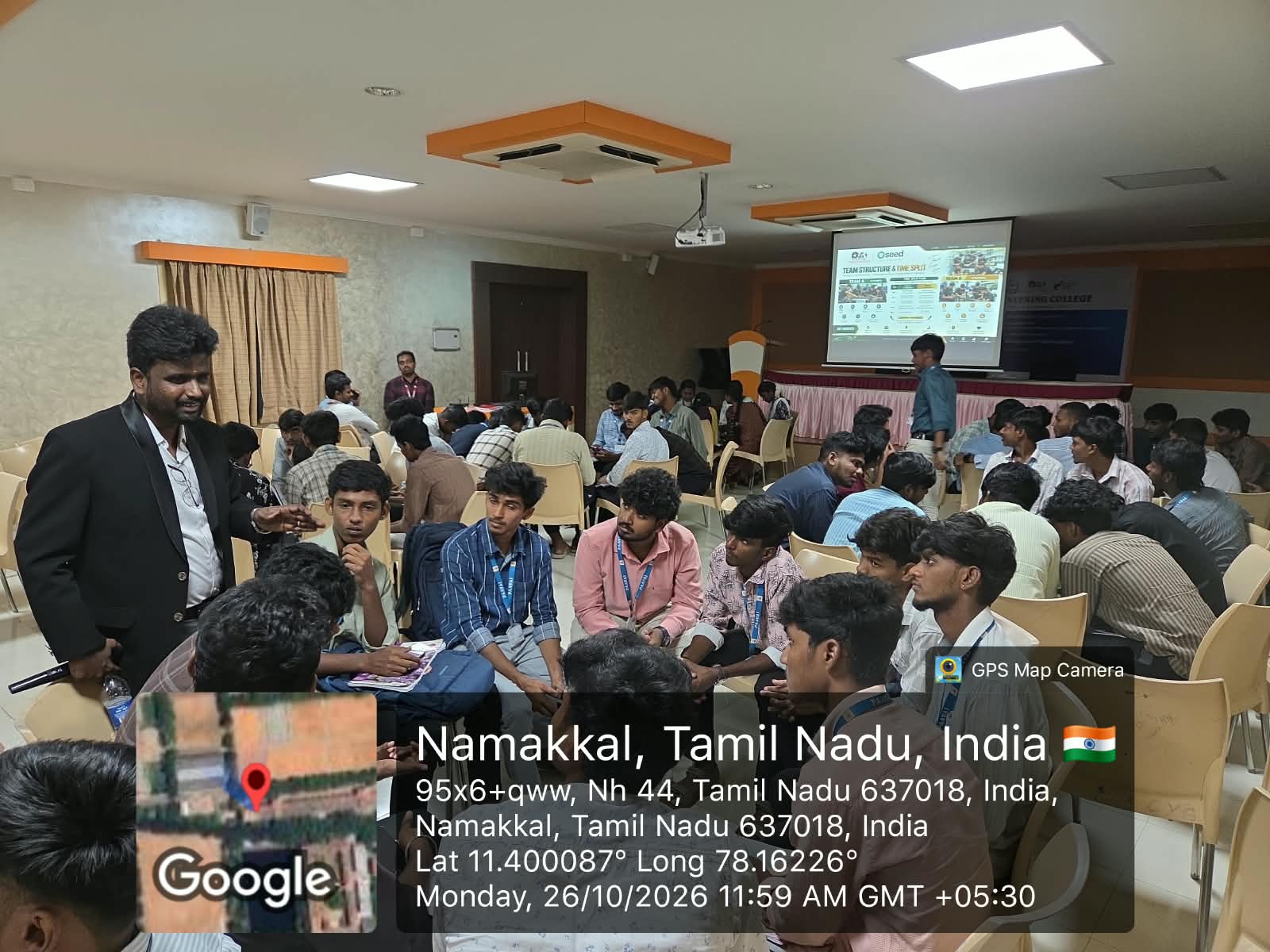
The programme commenced on 26.10.2026 with a session handled by Mr. R. Alagarsamy, Chief Executive Officer (CEO), Mechnido and Mechnido SEED, Coimbatore. The session focused on EV product development, vehicle architecture, system engineering, component selection, EV packaging, and component layout optimization. The resource person explained the different stages of electric vehicle development, from conceptual design to product realization. The interactive session provided students with industry-oriented knowledge and encouraged them to explore innovative EV-based projects.
Day 2 – “Battery Pack & Powertrain Engineering”
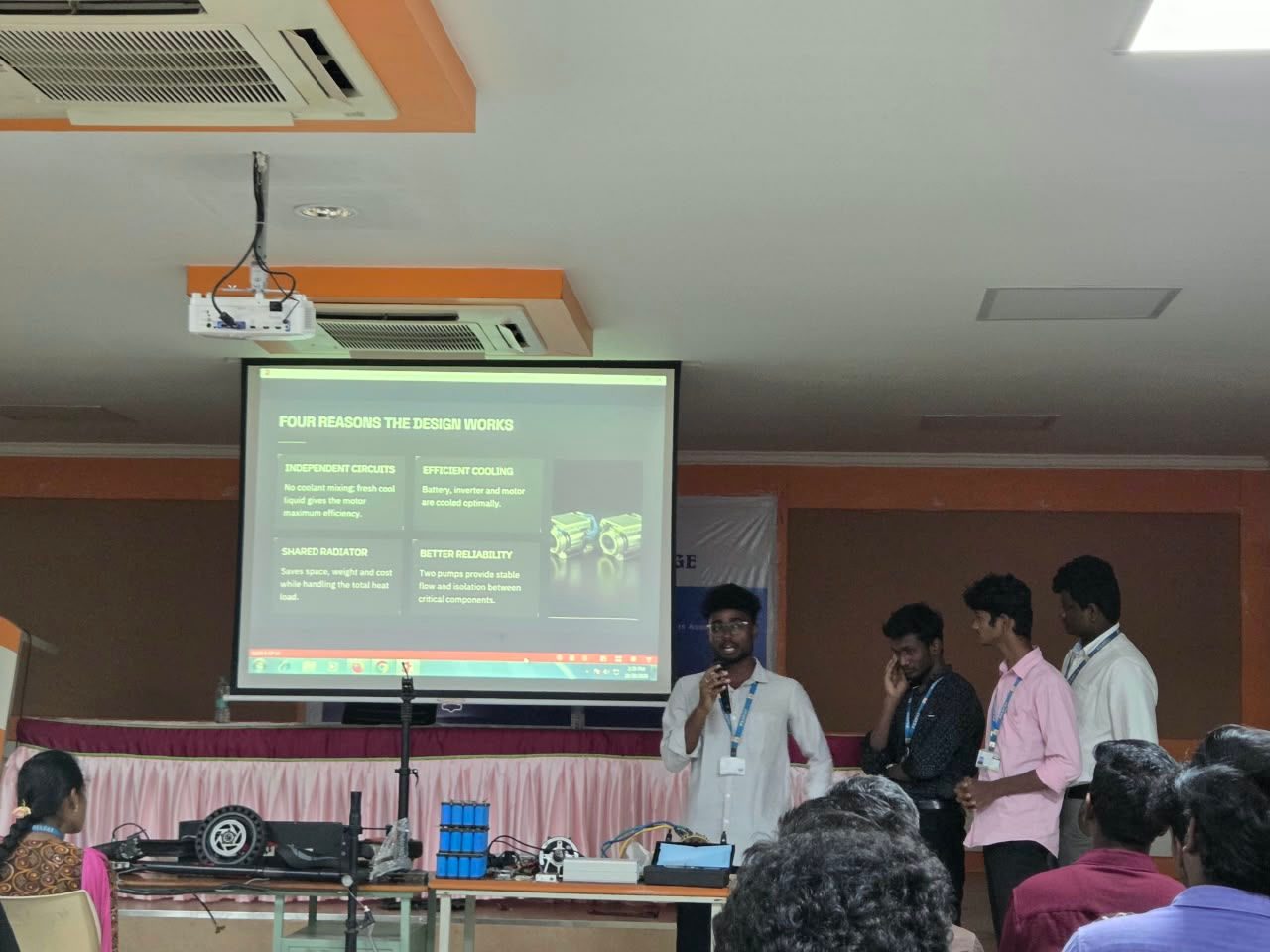
The second-day session on 27.10.2026 was handled by Mr. R. Vivek, Chief Growth Officer (CGO), Mechnido, Coimbatore. The session covered battery pack design, Battery Management Systems (BMS), thermal management, electric motor selection, controller integration, and high-voltage electrical architecture. The resource person explained battery pack assembly, electrical connections, safety considerations, and powertrain integration. The session provided valuable insights into battery technologies and the engineering principles involved in developing efficient electric vehicles.
Day 3 – “Vehicle Fabrication & Prototype Assembly”
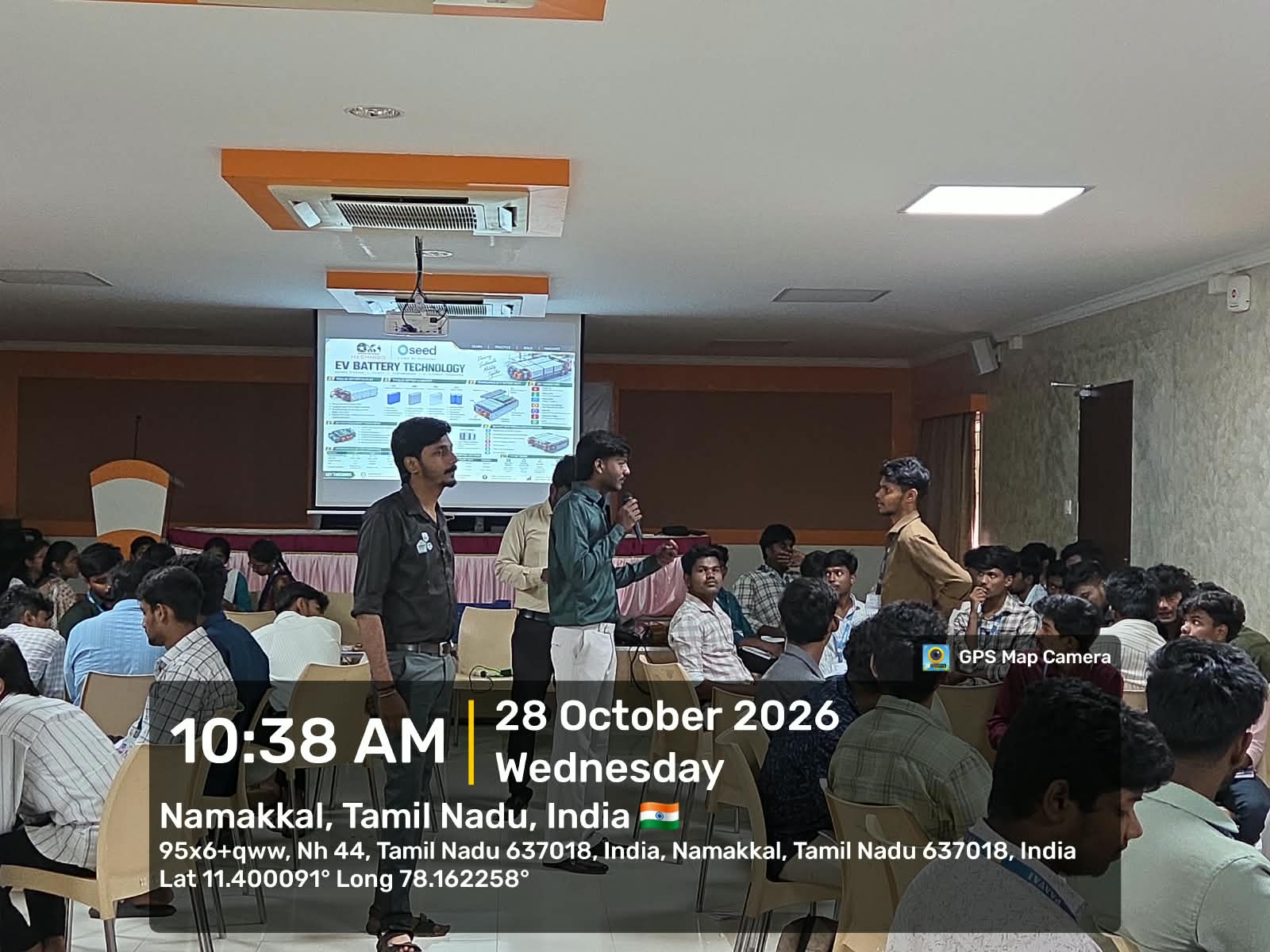
The third-day session on 28.10.2026 was handled by Mr. Tamilkumaran, Product Design Engineer, Mechnido, Coimbatore. The session focused on EV chassis fabrication, structural design, material selection, mechanical and electrical assembly, wiring harness integration, and prototype development. The resource person explained fabrication techniques, component mounting, proper tool handling, and systematic assembly procedures. Practical demonstrations helped students understand vehicle fabrication methods and industrial practices involved in electric vehicle prototype development.
Day 4 – “Smart Vehicle Control & Performance Validation”
The fourth-day session on 29.10.2026 was handled by Mr. Pon Raghavan, Product Design Engineer, Mechnido, Coimbatore. The session covered Vehicle Control Units (VCU), Controller Area Network (CAN) communication, sensor integration, energy management, regenerative braking, and EV diagnostics. The resource person explained vehicle performance evaluation, system calibration, fault detection, and validation procedures. The session enhanced students’ understanding of smart vehicle control systems and industrial testing methodologies.
Day 5 – Value Added Course Concluding Session
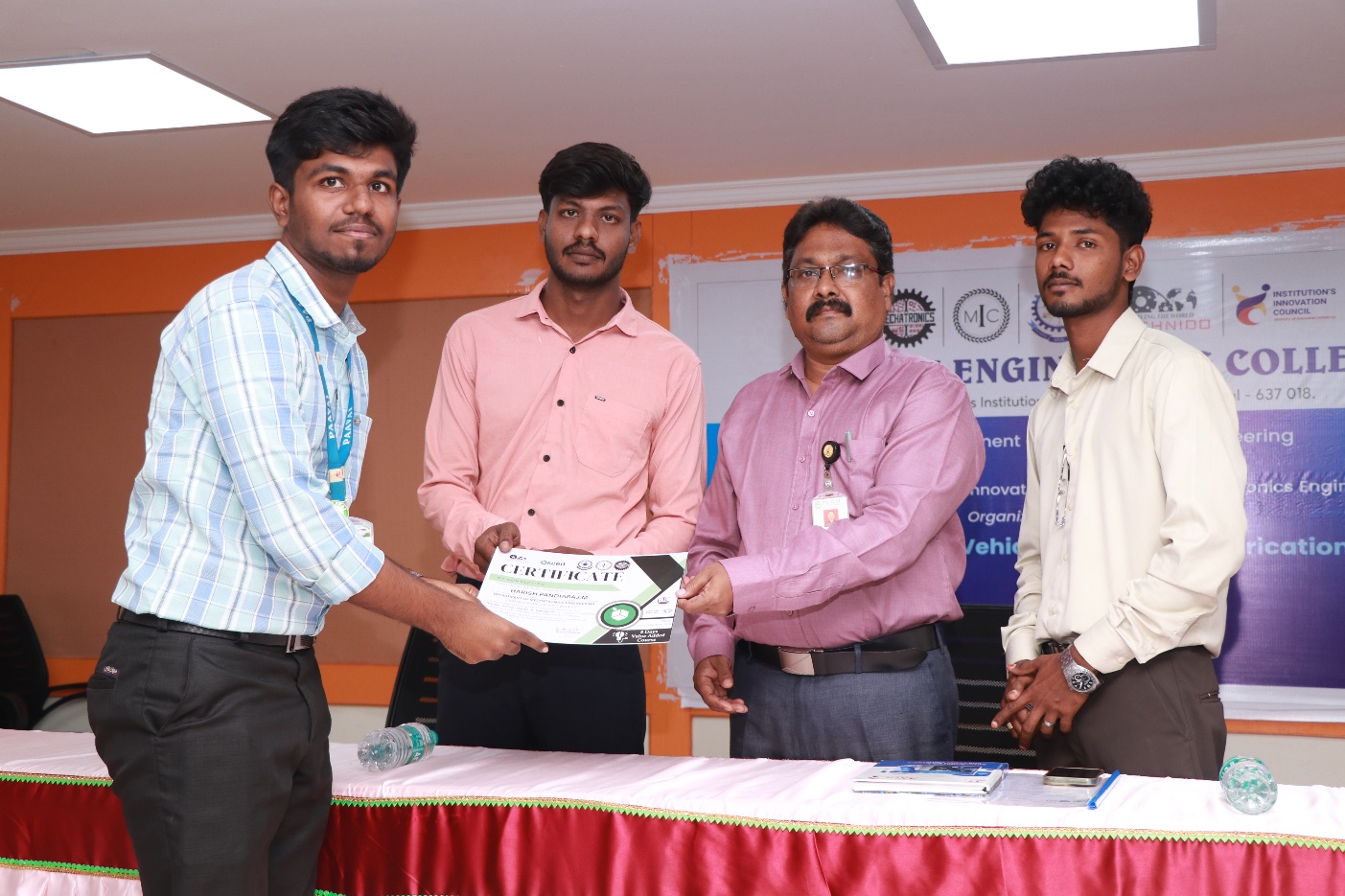
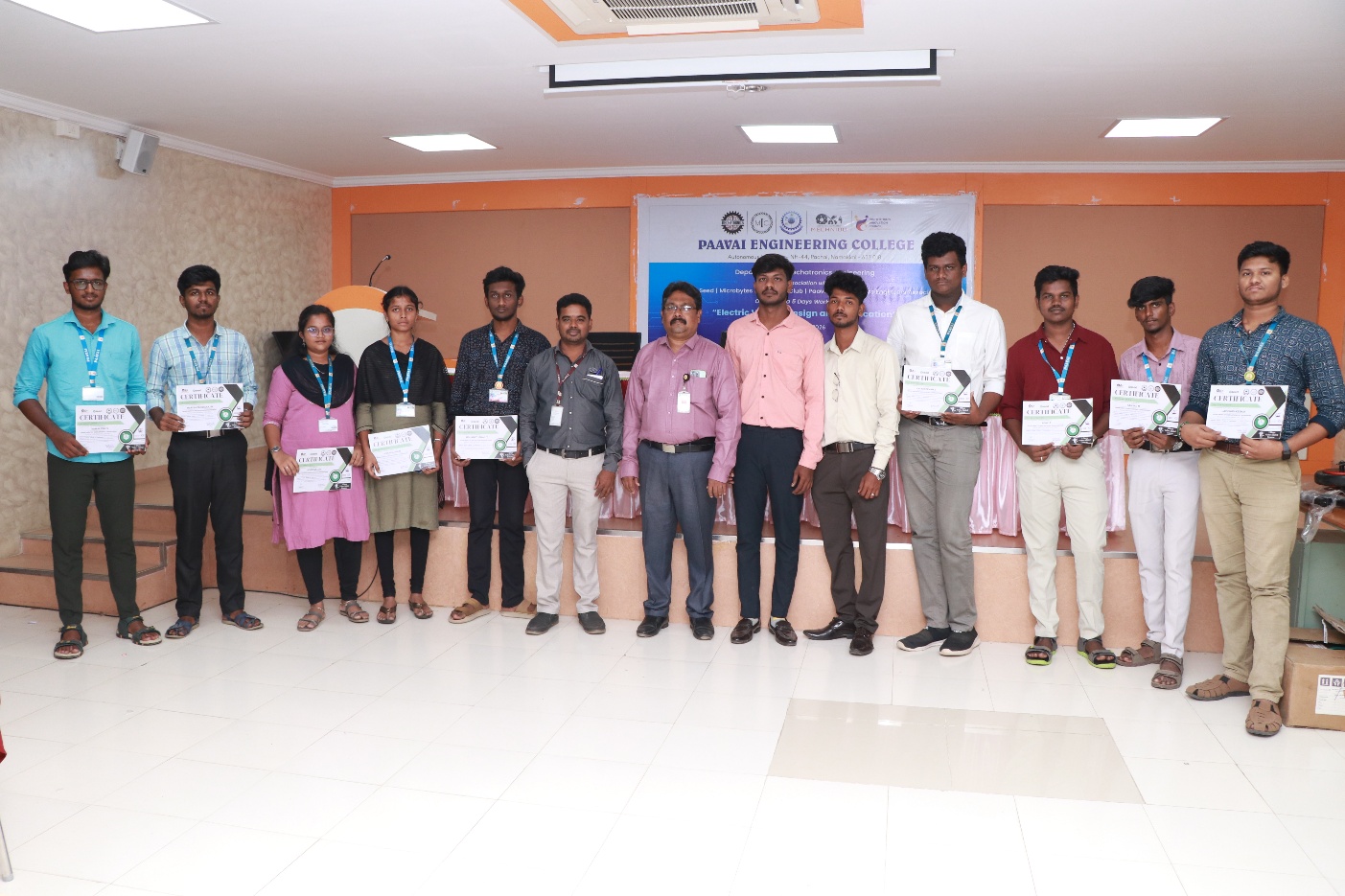
The final-day programme was conducted on 30.10.2026 with Mr. R. Ashwin, Academic–Industry Partnership Head, Mechnido, Coimbatore, as the resource person. The session highlighted the importance of industry–academia collaboration, technical skill development, internships, student projects, and industry-oriented training. The programme concluded with the distribution of certificates to the participants and a group photograph.
Conclusion
The five-day Value Added Course provided valuable exposure to EV system design, battery pack engineering, powertrain integration, vehicle fabrication, prototype assembly, smart vehicle control, and performance validation. The interactive sessions and technical demonstrations by industry experts enhanced the practical knowledge and technical competencies of 109 students. The programme successfully strengthened industry–academia interaction and encouraged students to explore emerging technologies and career opportunities in the electric vehicle sector.