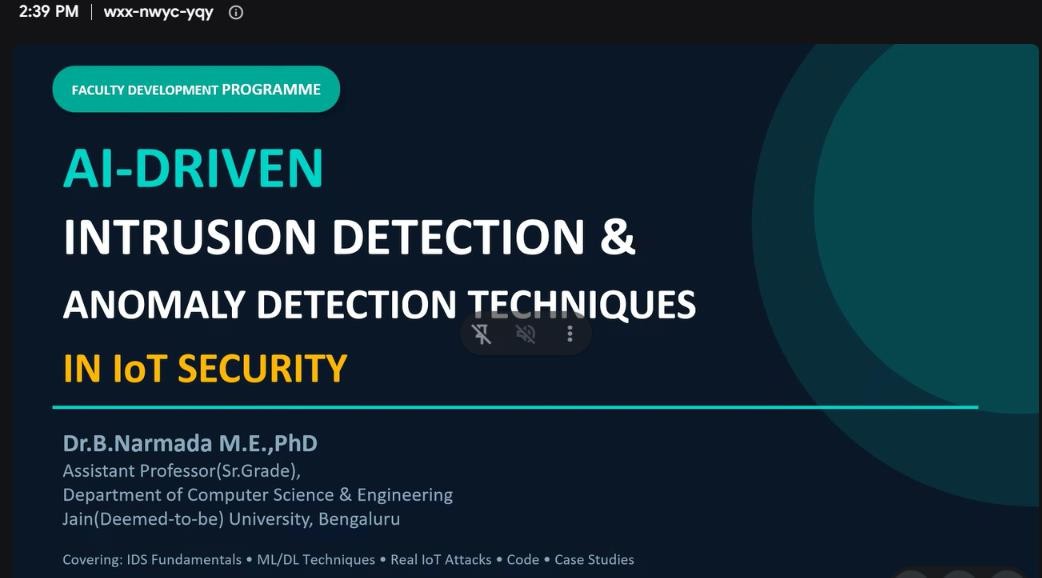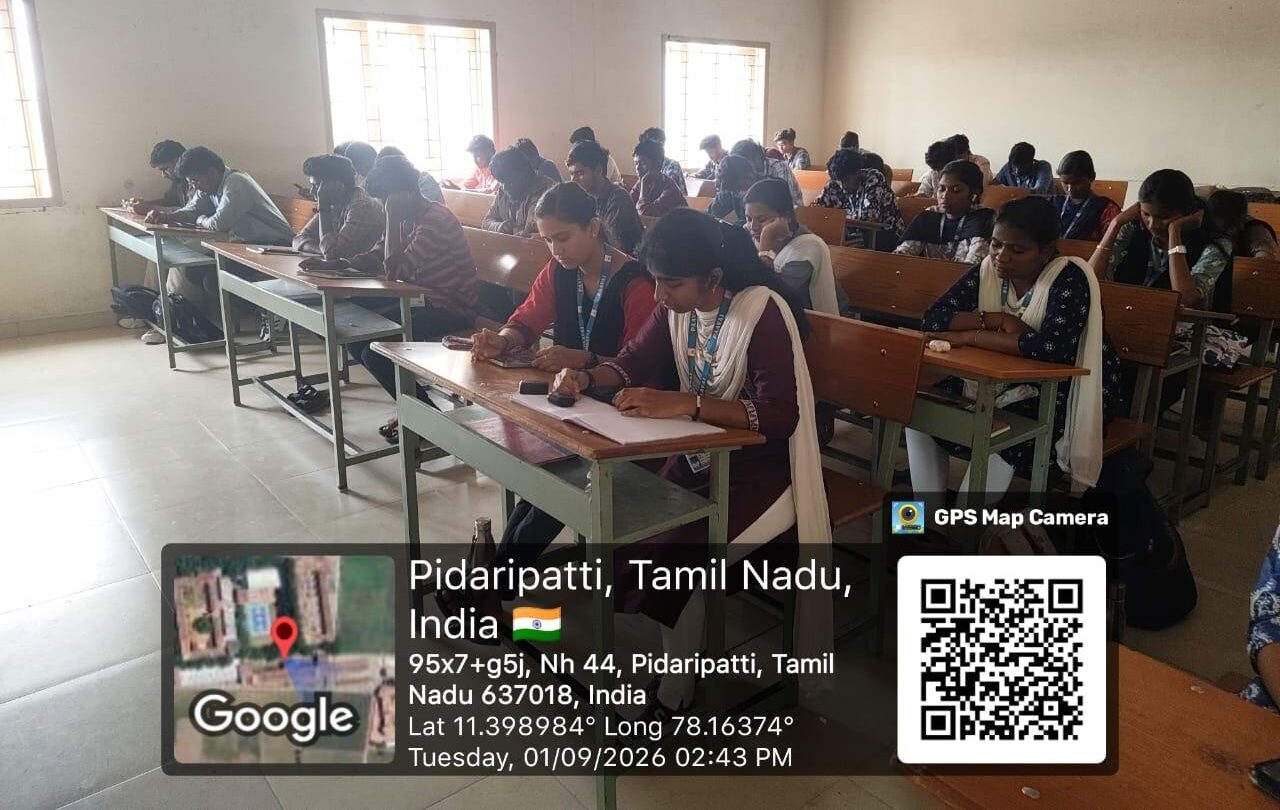
The Department of Computer Science and Engineering (Internet of Things), Paavai Engineering College (Autonomous), organized a guest lecture on “AI Driven Intrusion Detection and Anomaly Detection Techniques in IoT Security” on 1st September 2026 at 2.30 PM through an online platform. The programme was organized with the objective of creating awareness among students about the role of Artificial Intelligence in strengthening IoT security, particularly in detecting intrusions, identifying anomalies, and protecting IoT-enabled systems from emerging cyber threats. Students of the Department of CSE (IoT) actively participated in the programme.
Programme commenced with a welcome address by the department, followed by an introduction to the theme of the guest lecture. Dr. B. Narmada, Assistant Professor (Senior Grade), Department of Computer Science and Engineering, Jain (Deemed-to-be University), Bengaluru, served as the resource person for the session. The resource person was introduced to the participants, followed by an insightful technical session on AI-driven security mechanisms for IoT environments.
The lecture focused on the importance of Artificial Intelligence and Machine Learning techniques in intrusion detection and anomaly detection for IoT security. Dr. B. Narmada explained how AI-based approaches can be utilized to monitor network behaviour, identify unusual activities, detect potential cyber-attacks, and improve the security of interconnected IoT devices. Students gained valuable insights into the growing security challenges associated with IoT environments and the need for intelligent and adaptive security solutions.
The resource session further covered various aspects of intrusion detection and anomaly detection, including the identification of normal and abnormal network behaviour, analysis of suspicious activities, and the application of intelligent algorithms for real-time threat detection. The speaker highlighted the challenges involved in securing IoT systems, such as the large number of connected devices, limited computational resources, diverse network environments, and constantly evolving cyber threats.
The session also helped students understand how AI-driven security techniques can contribute to proactive threat identification and improve the reliability, privacy, and security of IoT infrastructures. The practical relevance of Artificial Intelligence in addressing emerging cybersecurity challenges was emphasized throughout the lecture.
Overall, the guest lecture enhanced students’ knowledge of AI-driven intrusion detection, anomaly detection, cybersecurity, and IoT security. The programme provided students with valuable exposure to current developments in AI-based security solutions and encouraged them to explore innovative approaches for protecting IoT-enabled systems from cyber threats.
The programme concluded successfully with a vote of thanks, expressing sincere gratitude to the management, Dr. B. Narmada, faculty members, coordinators, and students for their valuable support and active participation. The session was informative and beneficial in enhancing the technical knowledge and cybersecurity awareness of the students.