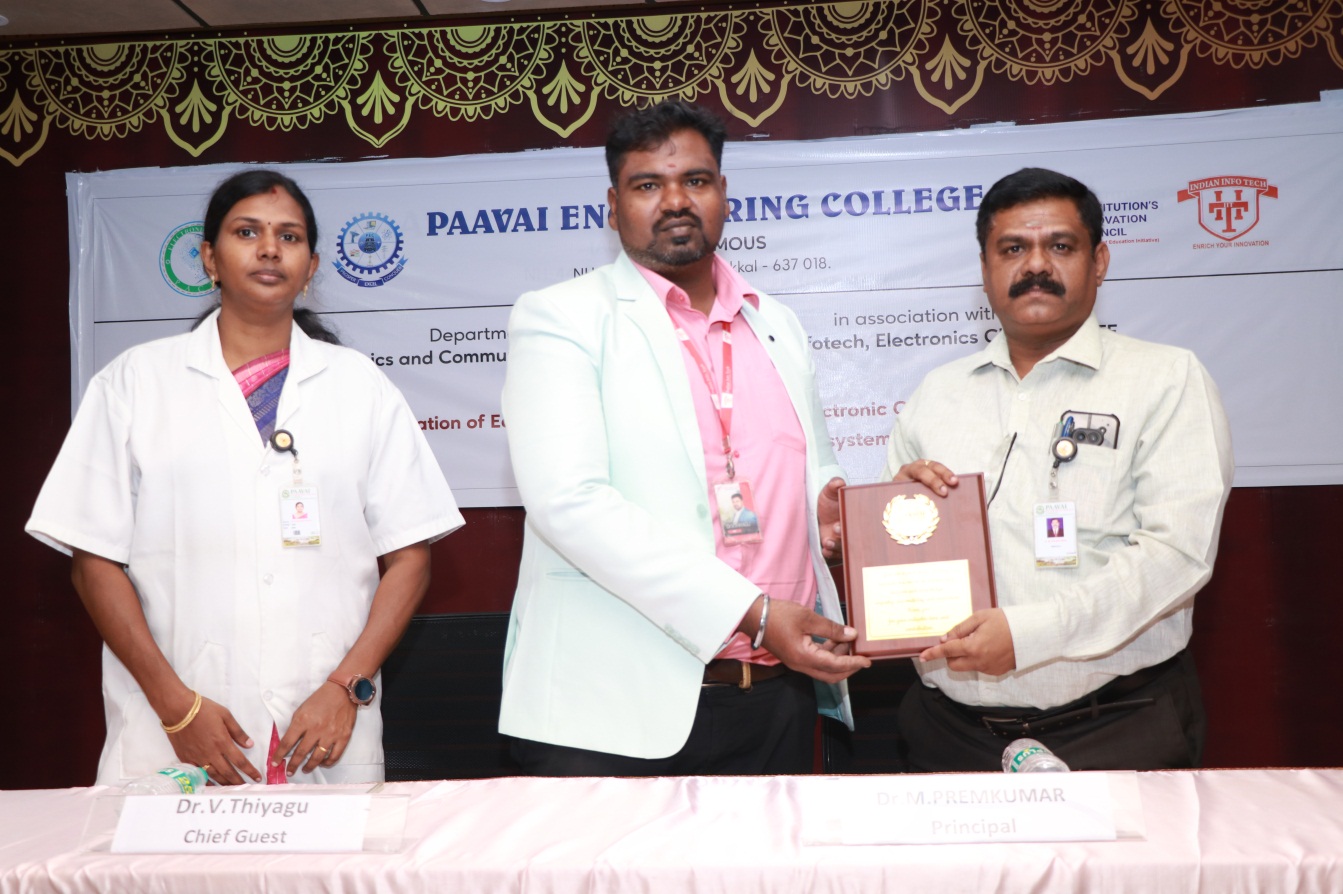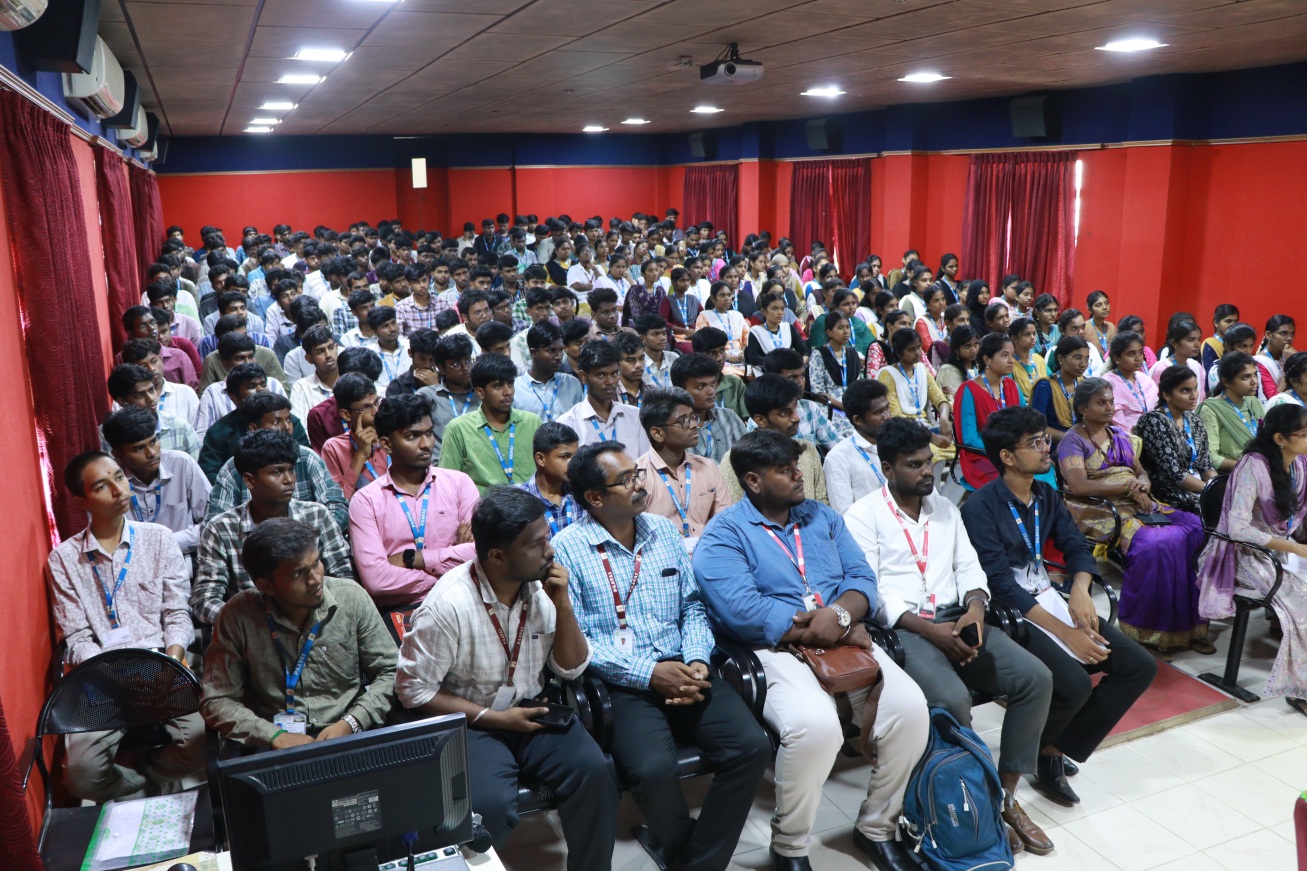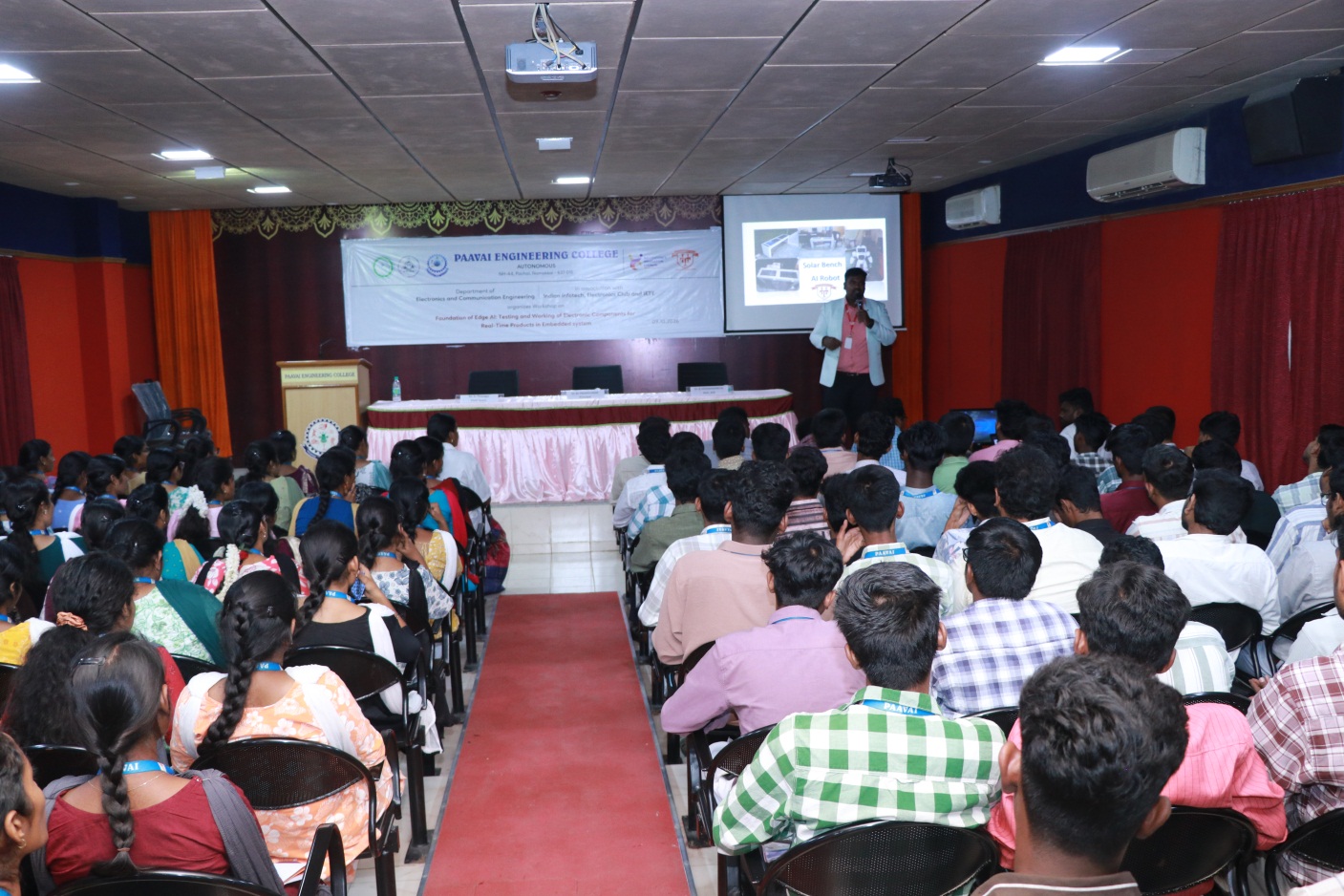
The Department of Electronics and Communication Engineering, Paavai Engineering College (Autonomous), in association with the Indian Info Tech, Electronics Club and IETE ,organized a Guest Lecture on “Foundation of Edge AI: Testing and Working of Electronic Components for Real-Time Products in Embedded System” on 9 th October 2026, from 09:30 AM to 4:30 PM at Kalam’s Chamber. The objective of the workshop was to provide students with comprehensive exposure to the fundamentals of Edge-AI, Testing working of Electronic Components, emerging trends in Embedded Systems. The programme aimed to bridge the gap between academic learning and industrial requirements by providing students with insights into advanced communication technologies, industry practices, emerging career pathways, and the skills required to succeed in the communication and networking industry. A total of 180 students from ECE department participated in the programme.
The programme commenced with the Prayer Song rendered by the students. This was followed by the presentation of the Vision, Mission, Programme Outcomes (POs), and Programme Educational Objectives (PEOs) of the Department by Ms. M. Sasi Poorani, IV Year ECE. The Welcome Address was delivered by Mr. Madhavan B. G, III Year ECE, who warmly welcomed the dignitaries, faculty members, and students to the programme.
The Presidential Address was delivered by Dr. K. K. Ramasamy, Director, Administration, Paavai Institutions. In his address, he emphasized the growing importance of advanced communication technologies in the digital era. He highlighted the transformative role of Edge AI, Emerging Trends in Embedded systems and other Real Time applications.
The Guest Introduction was presented by Ms. K. Dharanya, III Year ECE, who introduced the resource speaker and highlighted his professional experience and expertise in the field of communication networks and emerging technologies.
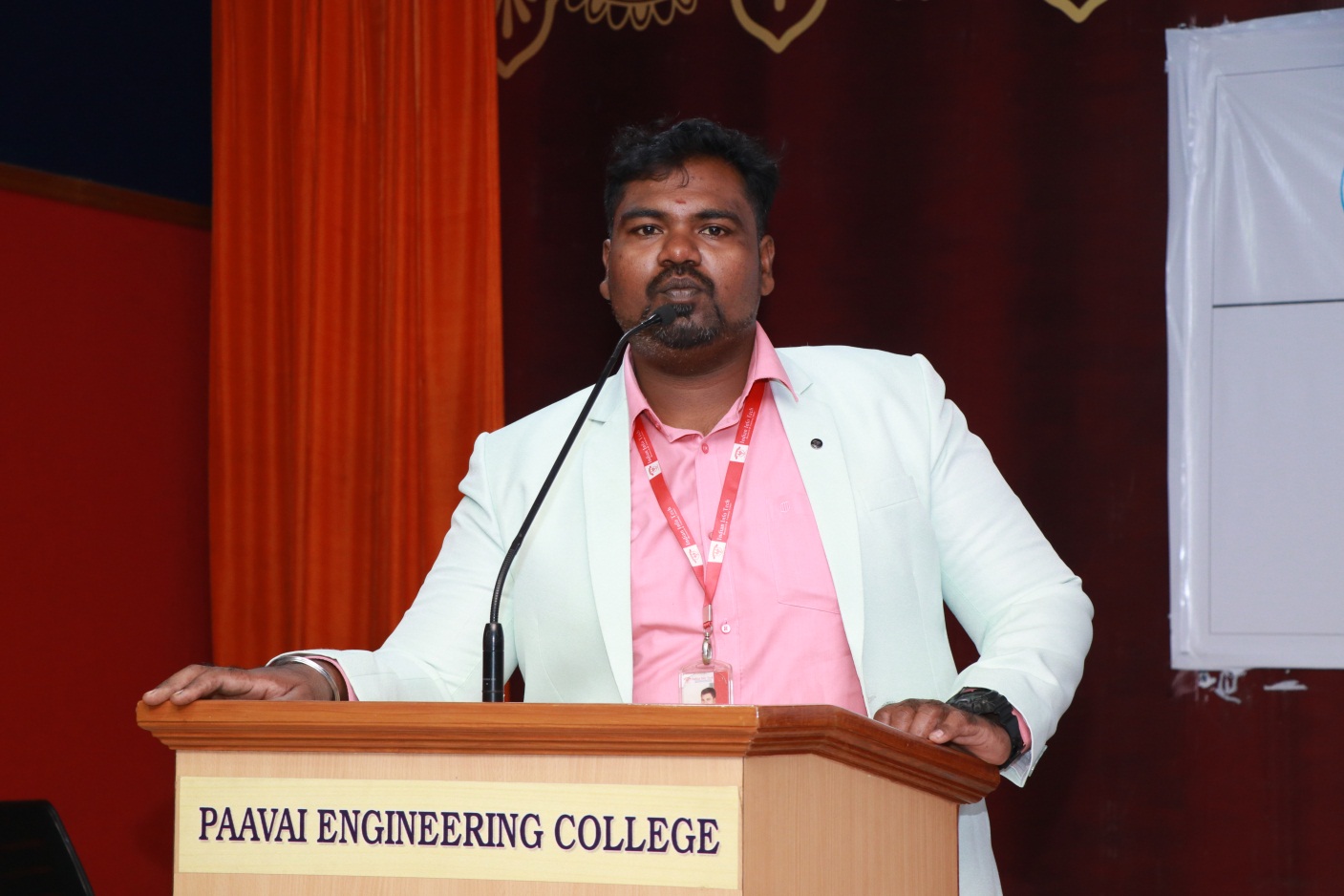
The Keynote Address was delivered by Dr. V. Thiyagu, Managing Director, Indian Info Tech, Namakkal. He provided valuable insights into the evolution of Edge AI from earlier generations to the present-day scenario. He explained the major features and capabilities of Edge AI, including Evaluation of edge AI in Embedded Systems, Component topology and working principles of Edge AI, Hardware and System designing Methodologies of AI and its new emerging applications.
The resource speaker further discussed the architecture and major components of next-generation Real Time AI Components. Students were introduced to concepts such as the Architecture of Next generation AI, distributed sub-system topology, Computing technologies, Manufacturing, Industrial IoT, Latency, Privacy and security related applications, Microcontrollers usage in Edge AI.
A significant part of the session was dedicated to career opportunities in the Artificial Intelligence domain. The resource speaker emphasized the importance of developing industry-relevant skills along with academic knowledge. Students were encouraged to gain practical exposure through internships, projects, certifications, AI tools, Electronic Components used in AI, Different AI technologies, and hands-on training. He also highlighted the importance of communication skills, teamwork, adaptability, and continuous upskilling for building successful careers in the rapidly changing AI industry.
The interactive nature of the Workshop enabled students to gain a better understanding of current developments in AI and next-generation AI technologies. The students actively participated in the session and gained valuable insights into the opportunities available in the Artificial Intelligence and electronics sectors. The lecture also helped students relate their classroom concepts in Electronic Devices, Embedded Systems, Microcontroller to real-world industrial applications.
The programme concluded with the Vote of Thanks, wherein gratitude was expressed to the resource speaker for his valuable technical presentation, industry insights, and guidance on career opportunities. The organizers also thanked the Management, Principal, Director Administration, Head of the Department, ISTE, faculty coordinators, faculty members, and students for their support and active participation in making the programme a successful event.
The programme highlighted the Sustainable Development Goals (SDGs) – SDG 4: Quality Education, SDG 8: Decent Work and Economic Growth, SDG 9: Industry, Innovation and Infrastructure, SDG 12: Ensure sustainable consumption and production patterns.
The programme was convened by Dr. R. Mohanapriya, HoD/ECE, and coordinated by the faculty members Mrs. S. Tamilarasi, AP/ECE, Mrs. A.Sujitha, AP/ECE. Dr. M. Premkumar, Principal, Paavai Engineering College, served as the Patron of the programme. The guest lecture witnessed enthusiastic participation from the students and faculty members. The programme successfully provided students with valuable exposure to Edge AI technology, next-generation AI technologies, emerging applications, industry trends, and career opportunities, thereby enhancing their awareness of the rapidly evolving telecommunications sector and encouraging them to prepare for future opportunities in the communication and electronics industry.