The Department of Mechanical Engineering, in association with the Institutions Innovation Council (IIC), organized a Guest Lecture titled “Session on Business Model Canvas (BMC) & Business Model Fit” on Monday, 31st August 2026, from 2:00 p.m. to 4:00 p.m. through online mode. The programme was conducted under the patronage of Dr. M. Premkumar, Principal, Paavai Engineering College (Autonomous). Dr. A. P. Sivasubramaniam, Head of the Department of Mechanical Engineering, served as the Convenor, while Mr. T. Thangavel, AP/Mech, and Mr. K. Anand, AP/Mech, coordinated the programme.
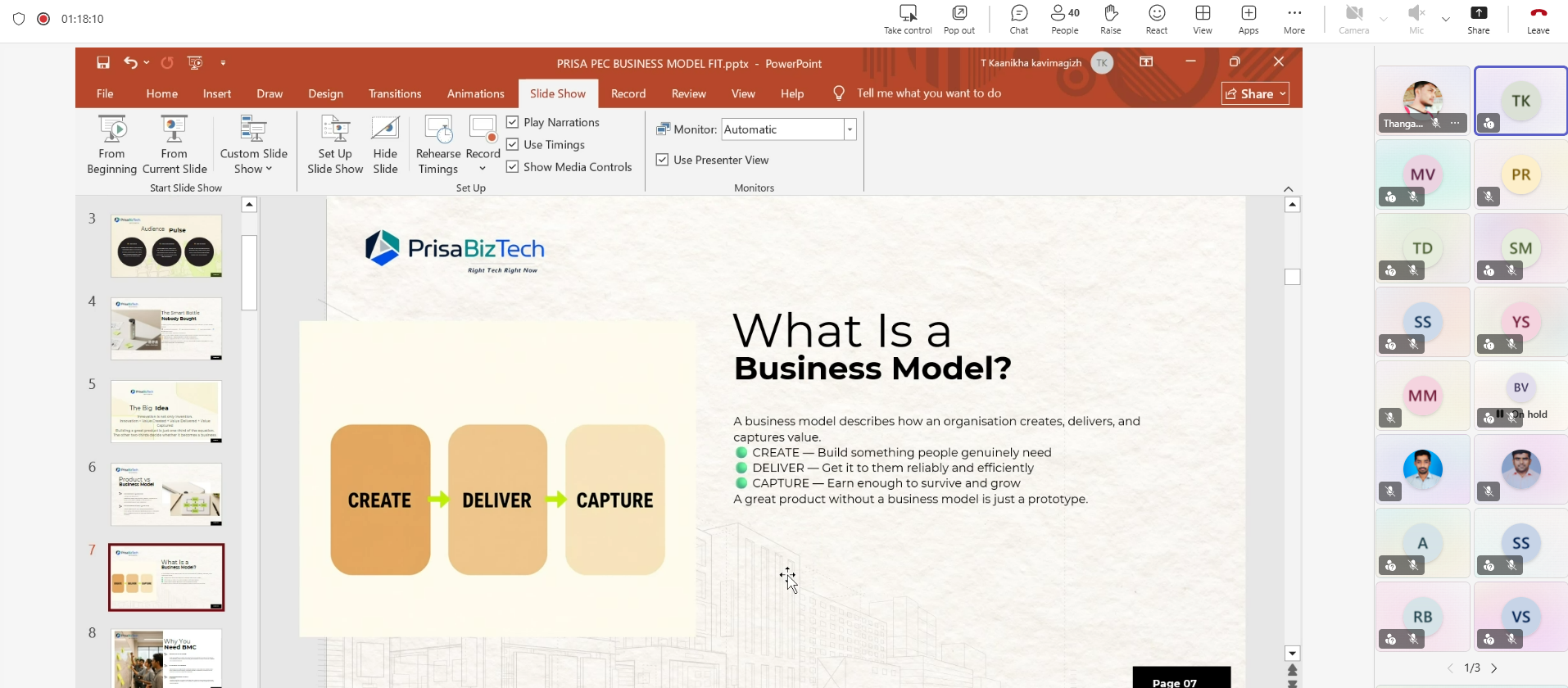
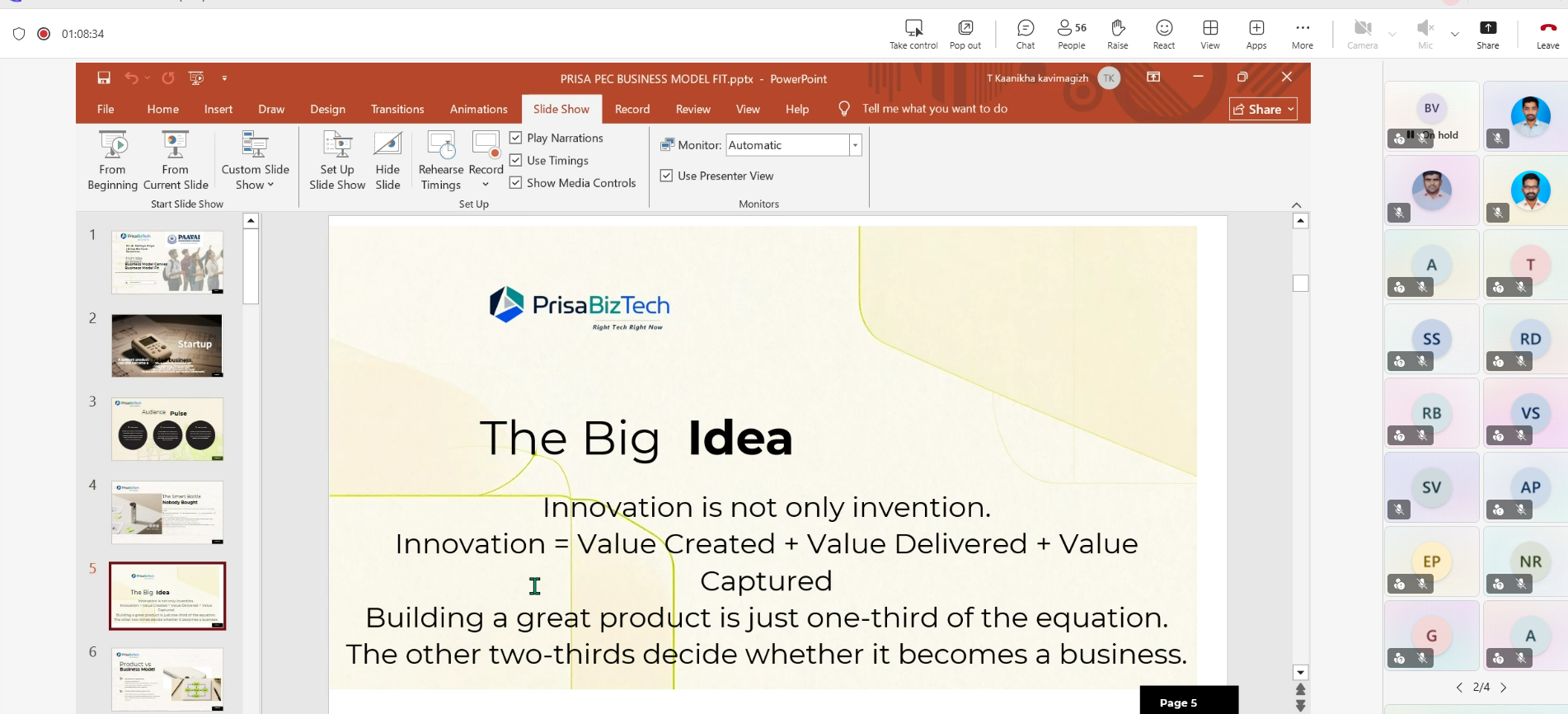
The resource person, Dr. A. Sathyapriya, MBA, Ph.D., Founder & Director, Prisa Biztech Solutions, Tiruchengode, shared valuable insights into entrepreneurship, business model development, innovation, and business model validation. The primary objective of the session was to familiarize students with the Business Model Canvas and its practical application in developing, evaluating, and refining innovative business ideas. The session emphasized that a successful venture depends not only on developing a good product but also on effectively creating, delivering, and capturing value. The concept was explained through the principle that “Innovation = Value Created + Value Delivered + Value Captured.”
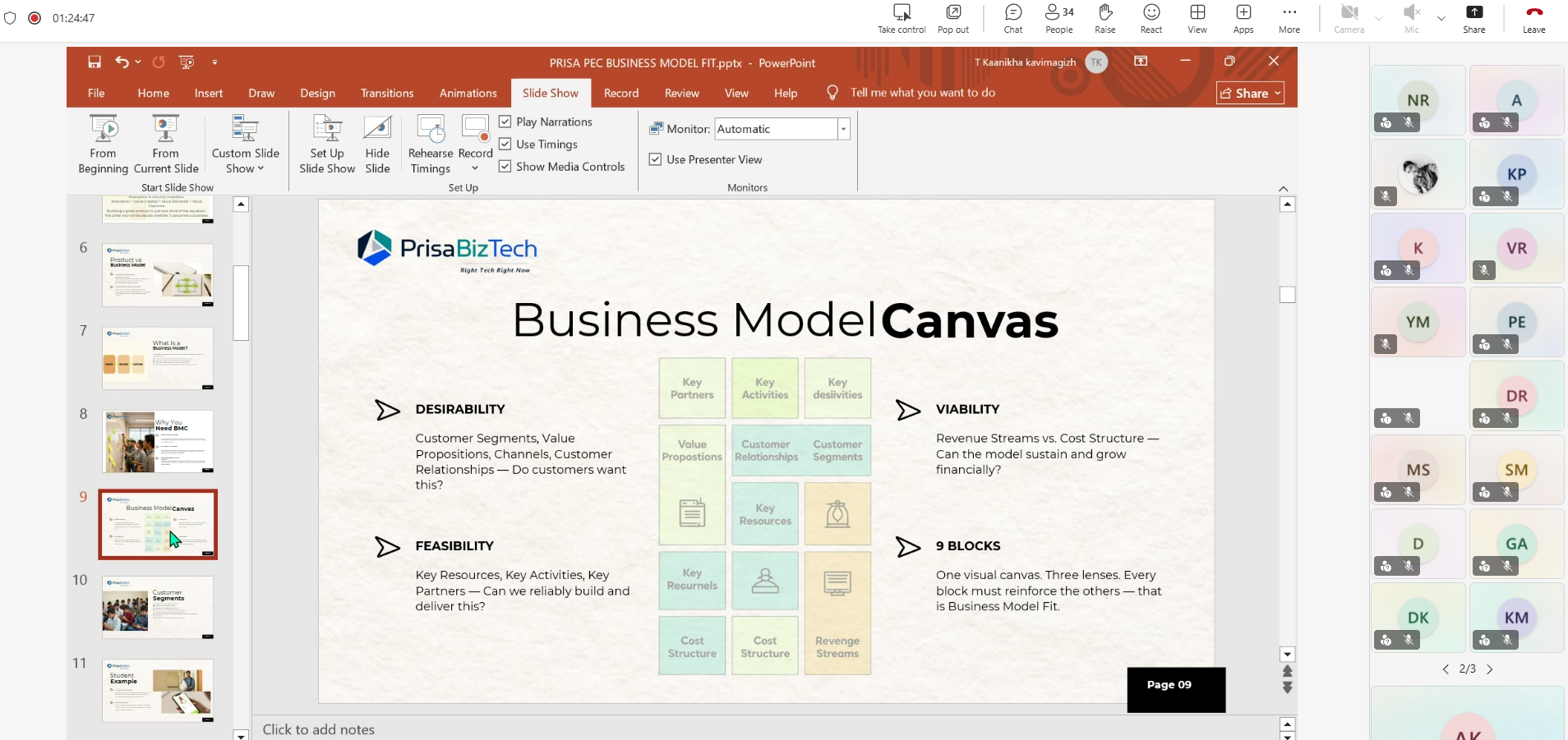
The session began with an interactive audience poll that highlighted the difference between having an idea and having a validated business opportunity. Through practical examples such as the “Smart Bottle Nobody Bought,” students understood the importance of identifying and validating the actual customer problem before developing a solution. The nine components of the Business Model Canvas—Customer Segments, Value Propositions, Channels, Customer Relationships, Revenue Streams, Key Resources, Key Activities, Key Partnerships, and Cost Structure—were explained through the three perspectives of desirability, feasibility, and viability. A detailed Campus Laundry Pickup example helped participants understand how the different elements of a business model work together.
Several successful business models, including Airbnb, Amul, Zerodha, and Namma Yatri, were discussed to demonstrate how innovative business models can create competitive advantage. The resource person also introduced the concept of Business Model Fit, emphasizing Customer Fit, Problem Fit, Channel Fit, and Economic Fit. Students were guided to identify assumptions and risks and to validate their ideas through cost-effective methods such as user interviews, paper prototypes, landing pages, pre-order tests, and small pilot projects.
The programme included engaging activities such as the BMC Sprint, Canvas Challenge, and a 60-Second Pitch, through which students worked in teams to develop business models, identify their riskiest assumptions, and design experiments for validation. The session also highlighted common entrepreneurial mistakes, including starting with a solution instead of the problem, considering everyone as the target customer, confusing users with payers, and overlooking hidden costs. The programme concluded with a practical 30-day action plan covering problem interviews, development of the first Business Model Canvas, prototype testing, and evidence-based pitching. The interactive session and Q&A provided students with valuable practical knowledge and encouraged them to approach innovation with a problem-first and evidence-based mindset.