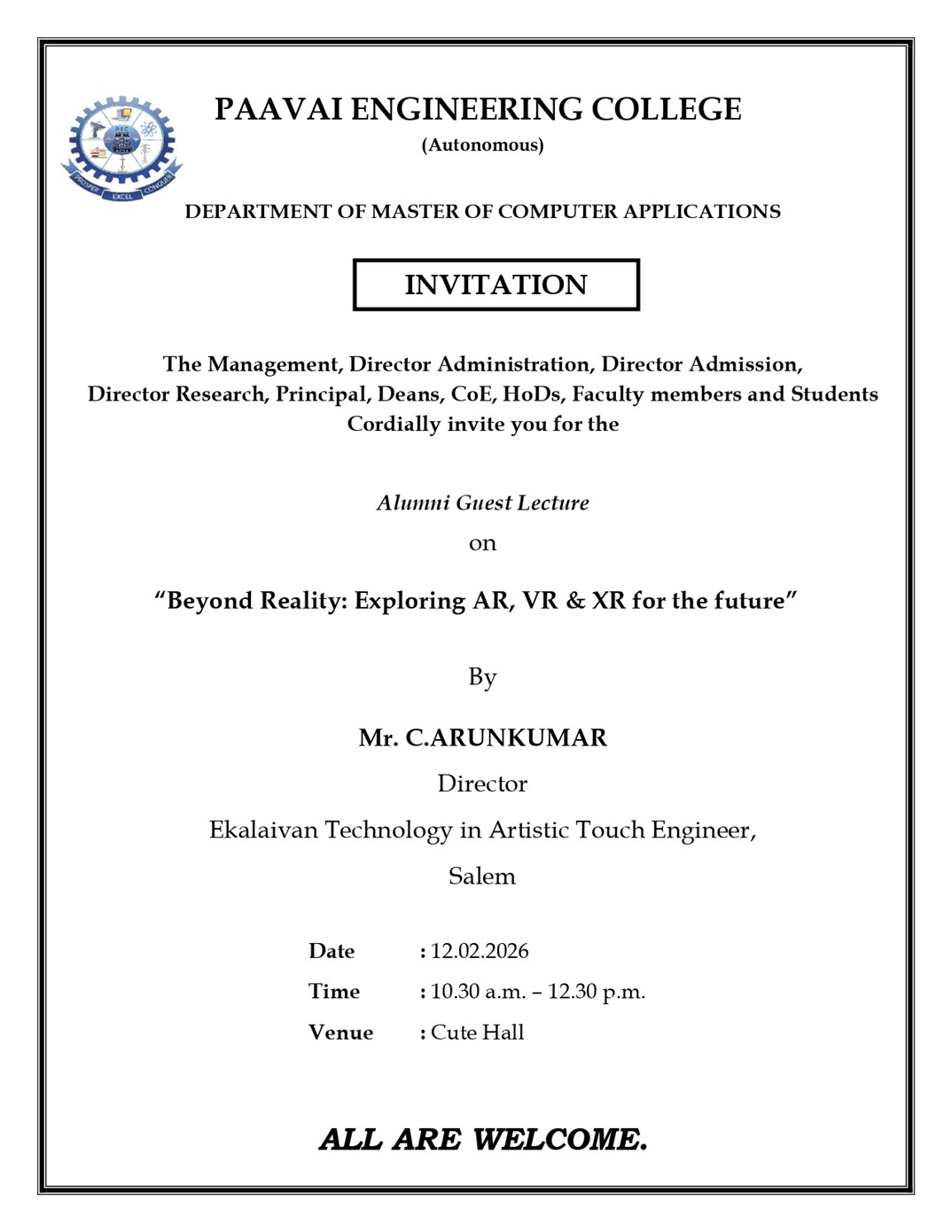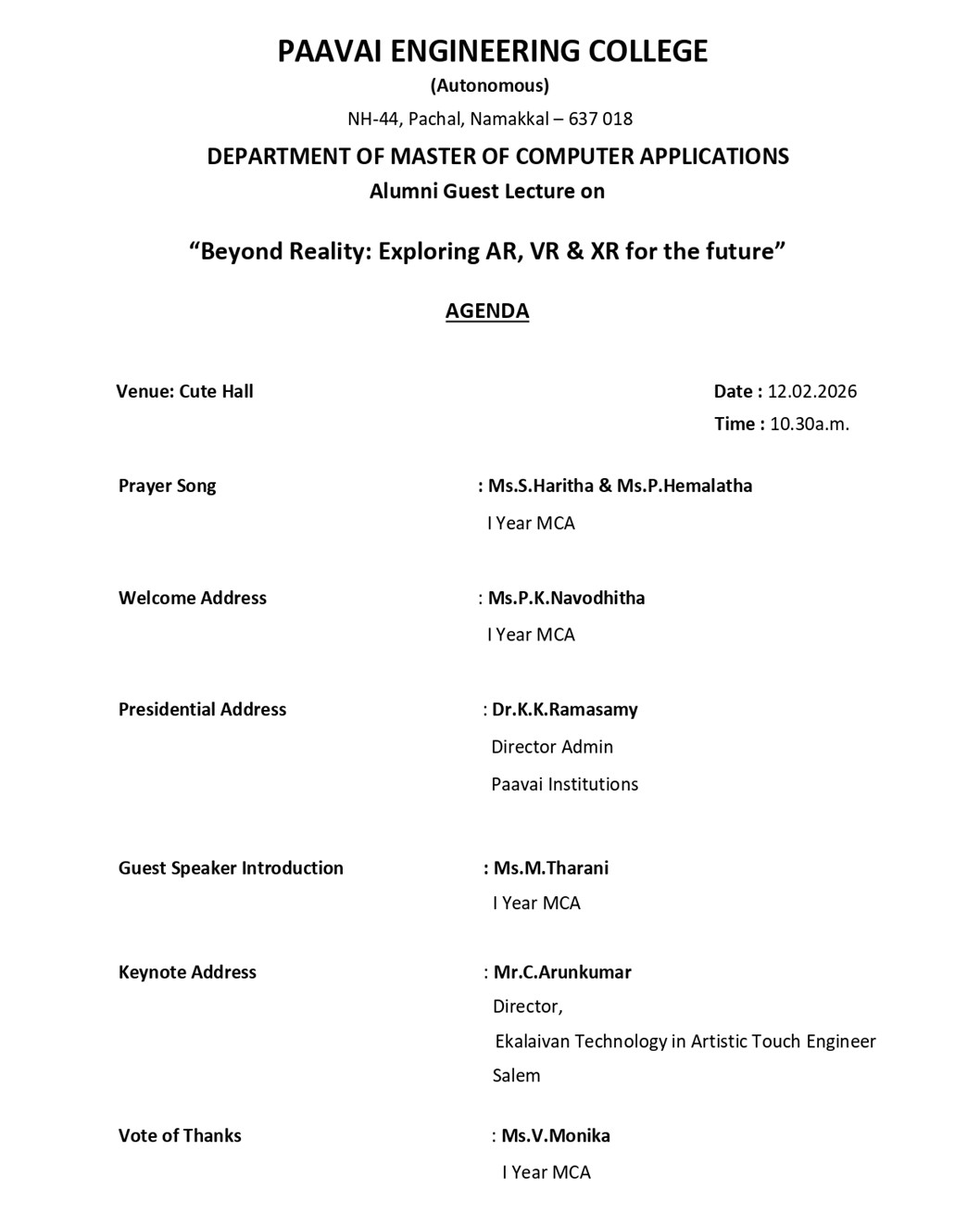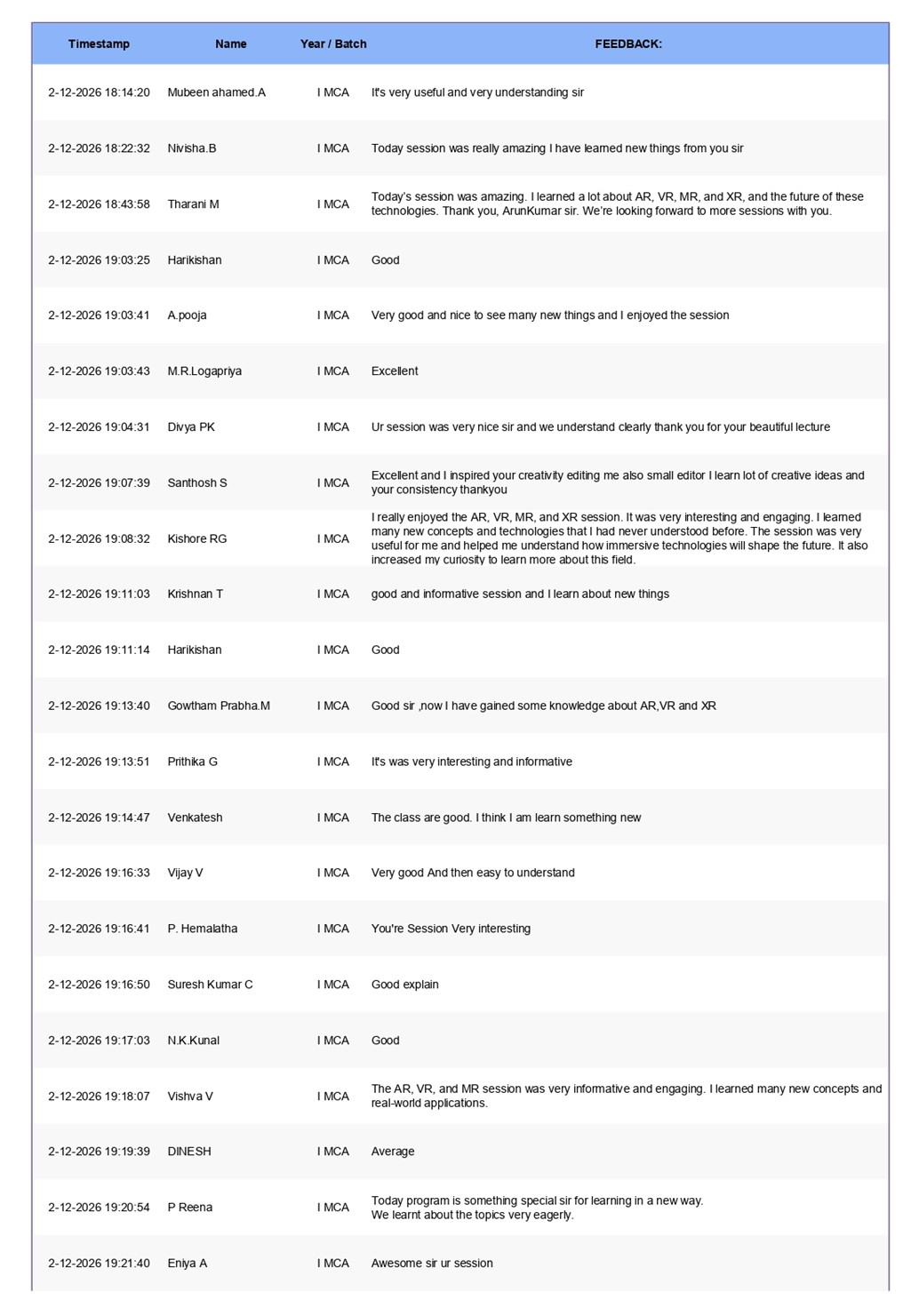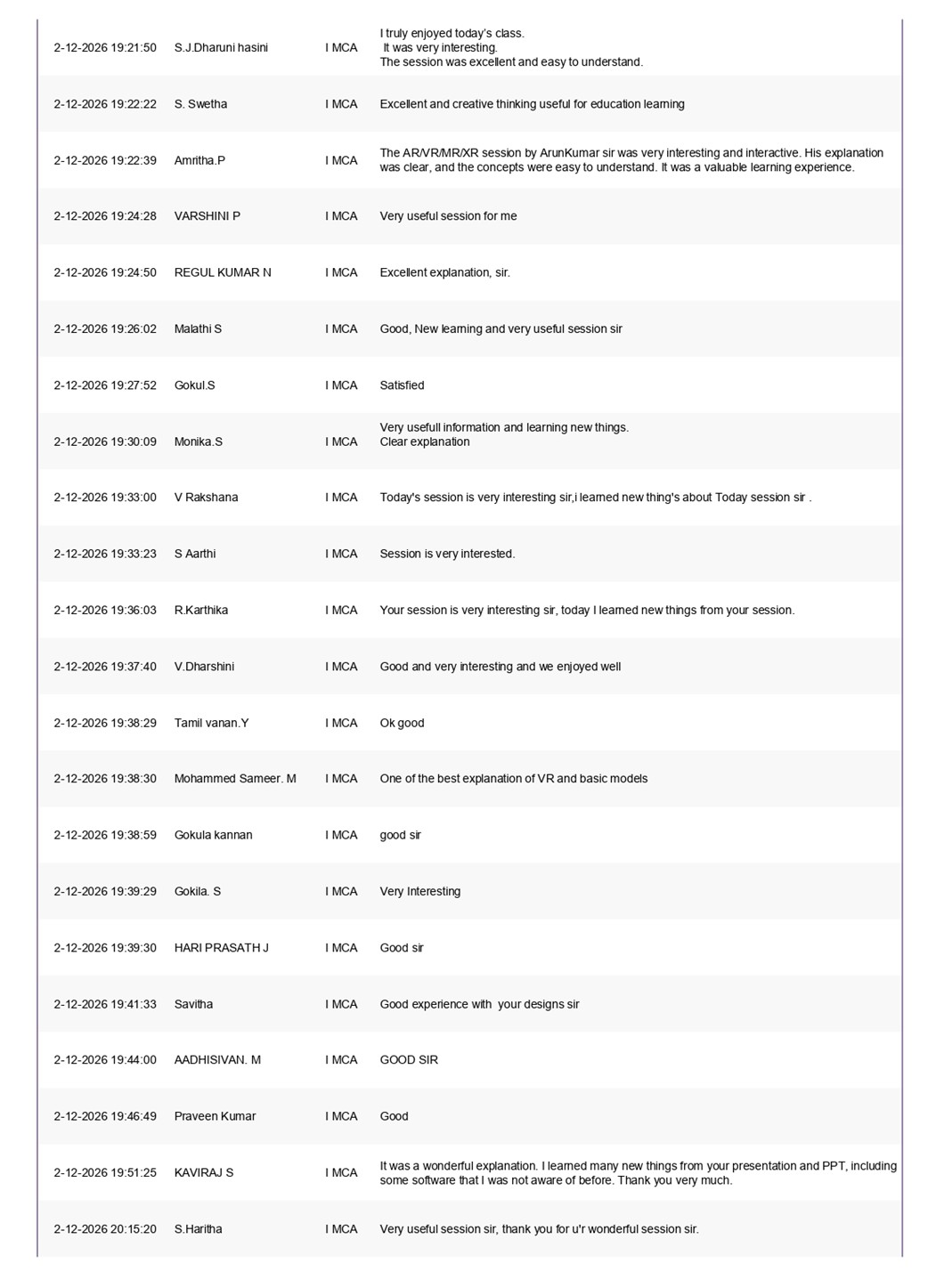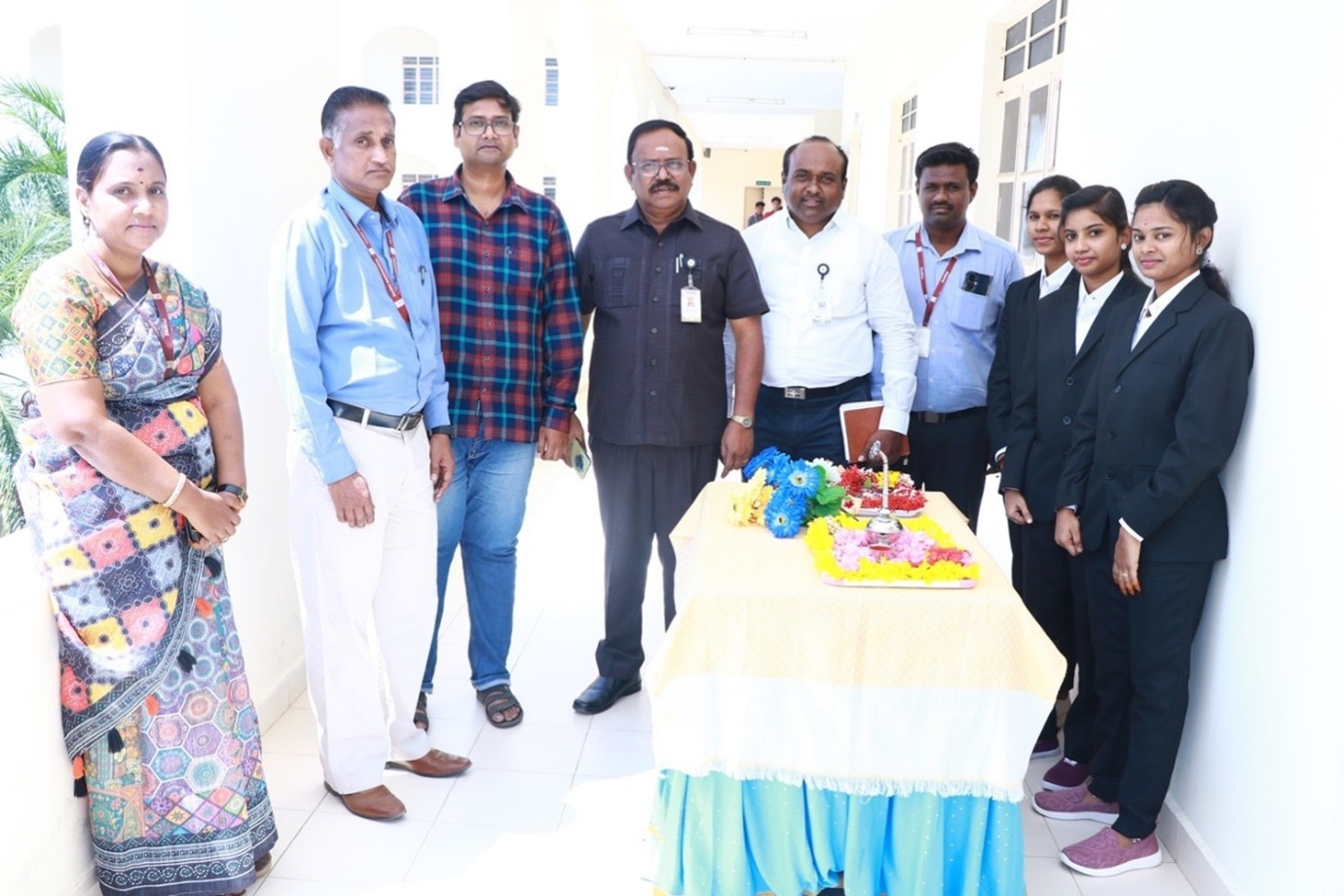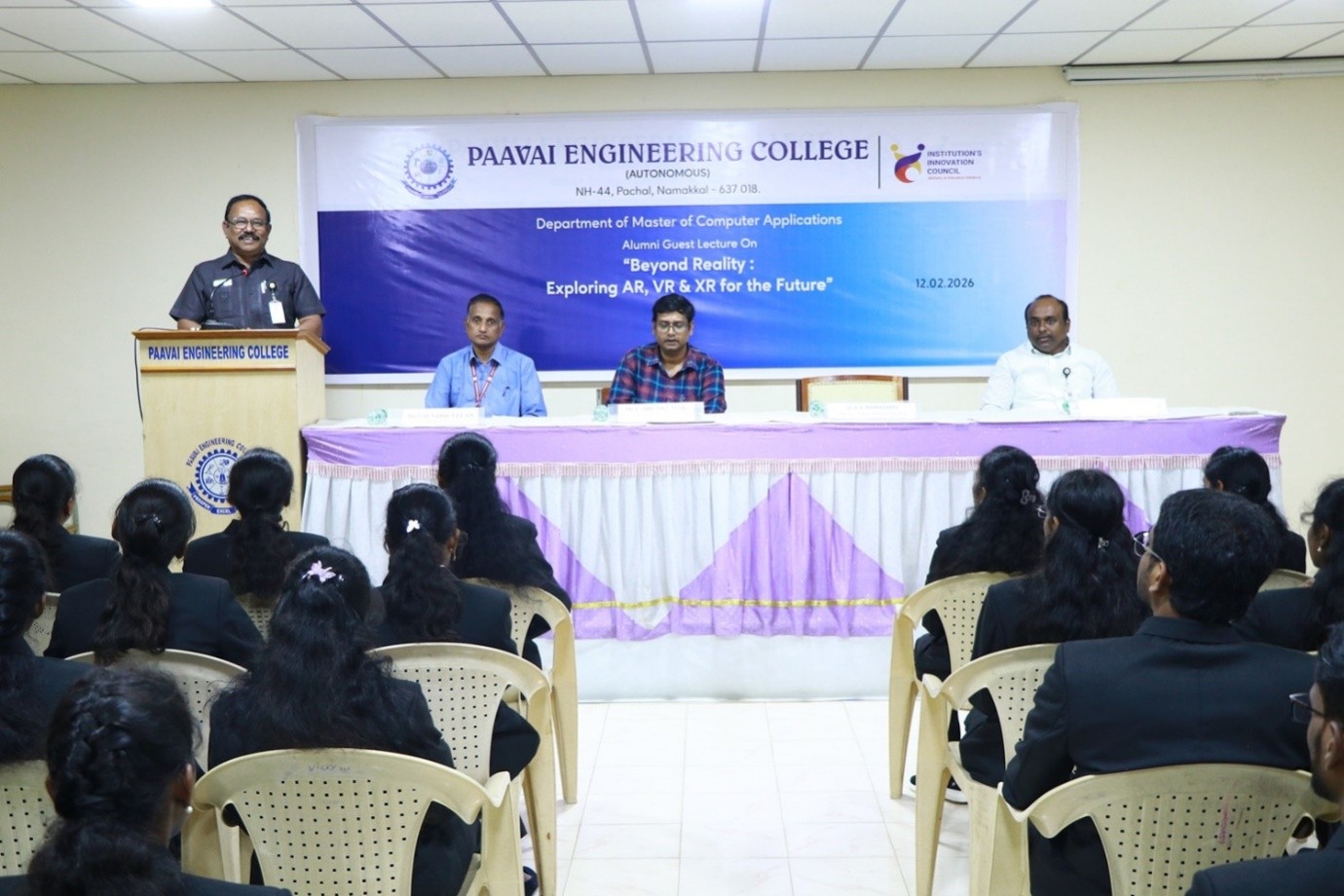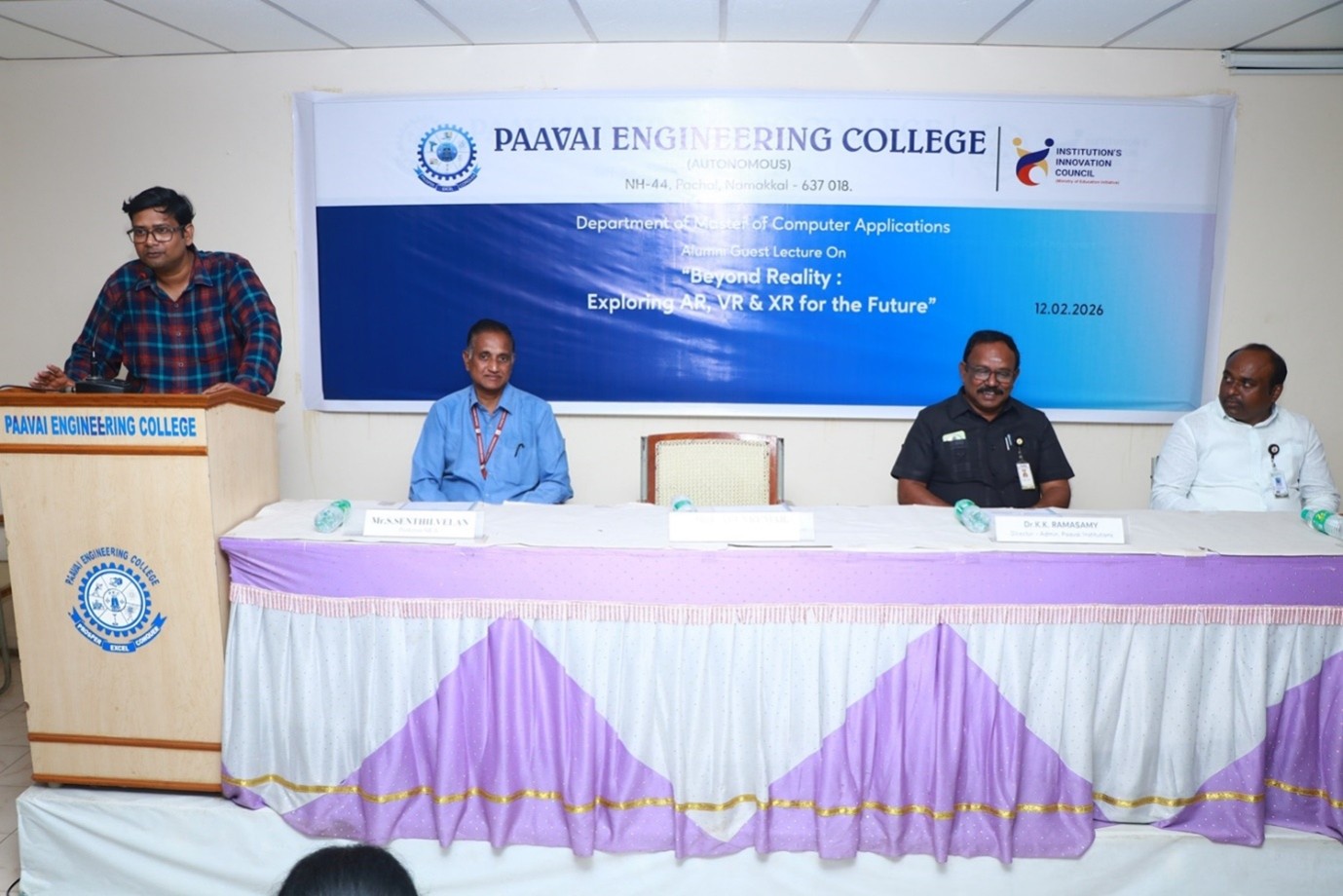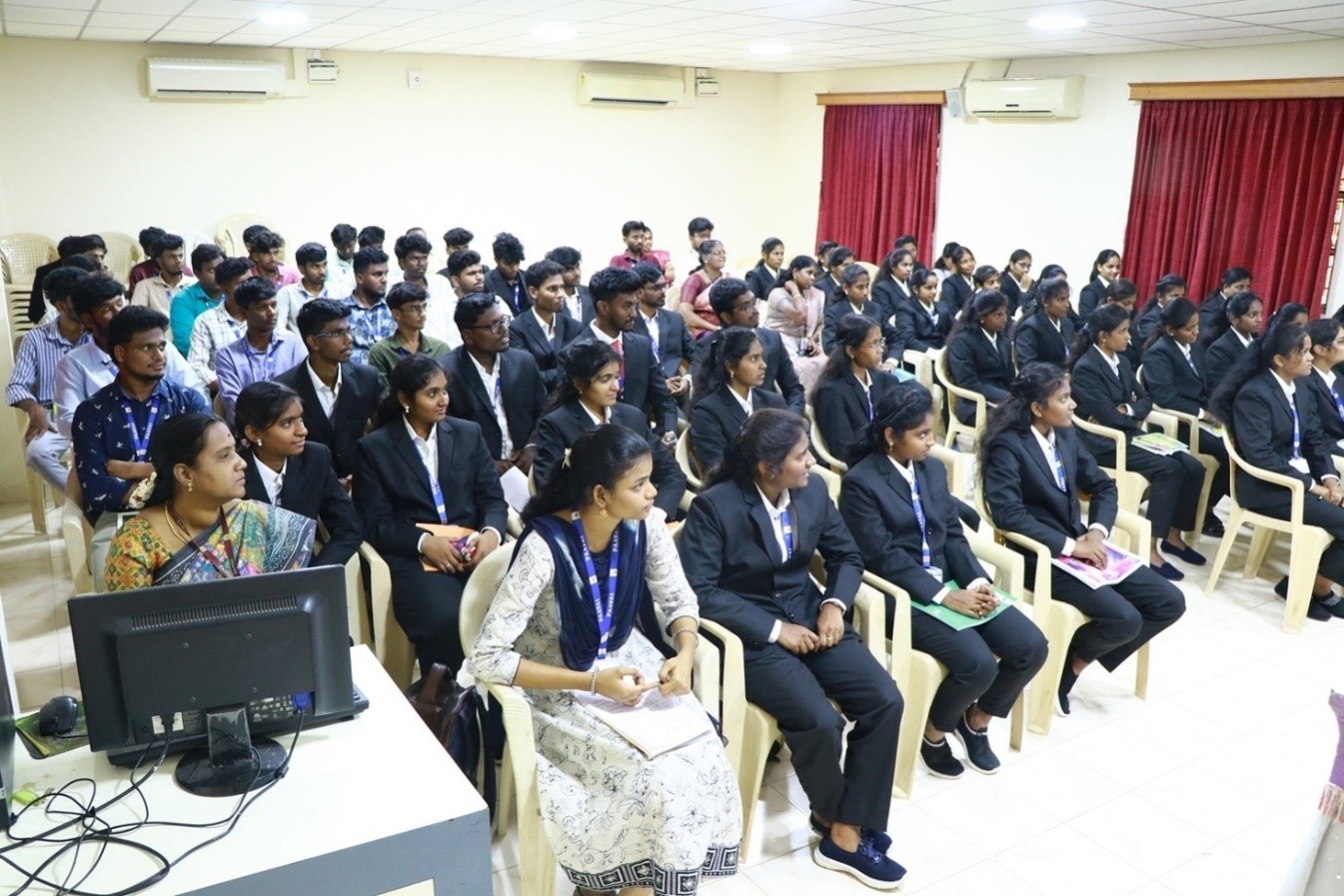
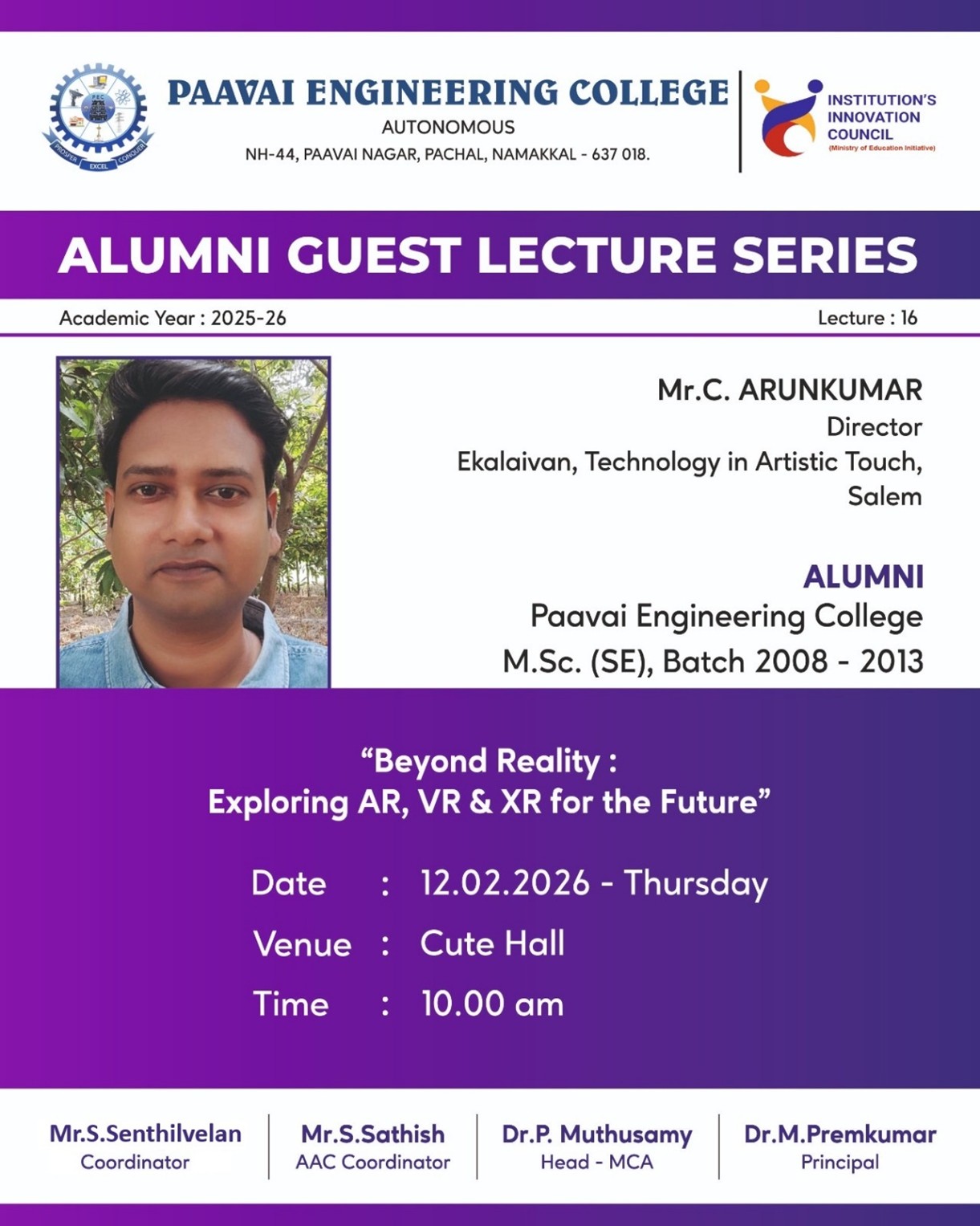
The Department of Master of Computer Applications organized anAlumni Guest Lecture on the topic “Beyond Reality : Exploring AR, VR & XR for the Future” on 12.02.2026 at Cute Hall.
The session commenced with a Prayer Song rendered by Ms.S.Haritha, and Ms.P.Hemalatha first year MCA, which set a positive and welcoming atmosphere for the event.
The session began with a welcome address delivered by Ms.P.K.Navaodhitha, first year MCA, who warmly greeted the gathering and highlighted the importance of the event.
The Presidential Address was delivered by Dr. K.K. Ramasamy, Director Admin, Paavai Institutions, who emphasized that exploring the future reality and Augmented Reality (AR) overlays digital content—images, text, or 3D models—onto the real world in real-time, blending physical and virtual environments. Unlike Virtual Reality (VR), which replaces reality, AR enhances it using smartphone cameras, tablets, or smart glasses. Key components include scene tracking, environmental understanding, and light estimation to make digital objects appear realistic.
Following this, Ms.M.Tharani, First Year MCA, introduced the Alumni, Mr.C.Arunkumar, Director, Ekalaivan, Technology in Artistic Touch, Salem.
The Keynote Address was delivered by the alumni Mr.C.Arunkumar on the topic “Beyond Reality : Exploring AR, VR & XR for the Future” He explained the fundamental concepts of Augmented reality is made up of the word “augment” which means to make something great by adding something to it. So basically, augmented reality is a method by which we can alter our real world by adding some digital elements to it. This is done by superimposing a digital image on the person’s current view thus it enhances the experience of reality.
AR, VR, MR, and XR are different forms of immersive media, which means they deal with objects and scenarios that are created digitally and can be used in different ways to enhance the experience for their users. That being said, XR forms the umbrella term. It is the combination of AR, VR, and MR experiences.
Session Highlights:
Augmented Reality (AR)
- Overlays digital content onto the real world in real time
- Uses smartphones, tablets, AR glasses
- Enhances perception without replacing reality
- Widely used in education, healthcare, retail, navigation, maintenance
- Examples: virtual try-ons, interactive textbooks, real-time annotations
Virtual Reality (VR)
- Creates a fully immersive, computer-generated environment
- Requires VR headsets and controllers
- Completely blocks the physical world
- Used in gaming, training simulations, virtual labs, therapy
- Enables risk-free learning and experiential training
Extended Reality (XR)
- Umbrella term covering AR, VR, and MR (Mixed Reality)
- Blends real and virtual environments seamlessly
- Supports immersive learning, collaboration, and design
- Key in Industry 4.0, smart manufacturing, digital twins
- Future-ready technology for the met averse and AI integration
Student Interaction & Discussions
- Interactive discussions on AR, VR & XR session
Q&A Session
- Students clarified queries related to certifications, career paths, internships, and projects.
Outcomes of the Lecture:
- Define and differentiate Augmented Reality (AR), Virtual Reality (VR), and Extended Reality (XR).
- Explain the working principles and core components of AR, VR, and XR systems.
- Compare AR, VR, and XR based on immersion level, hardware requirements, and use cases.
- Identify real-world applications of AR, VR, and XR in education, healthcare, industry, and entertainment.
- Analyze the benefits and limitations of AR, VR, and XR technologies.
- Apply conceptual knowledge to select suitable XR technologies for specific problem domains.
- Recognize emerging trends such as met averse integration, digital twins, and AI-driven immersive systems